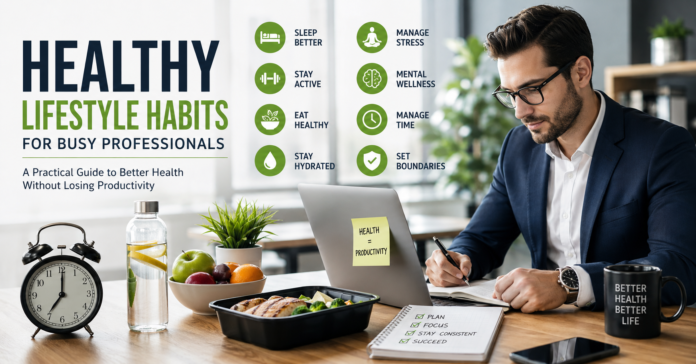
Healthy lifestyle habits for busy professionals do not require drastic changes or hours of free time. Small, consistent actions such as prioritizing sleep, meal planning, regular movement, stress management, hydration, and digital boundaries can significantly improve energy, focus, productivity, and long-term health while fitting into a demanding schedule.
Key Takeaways
- Prioritize sleep before optimizing anything else.
- Schedule exercise like a business meeting.
- Focus on meal preparation instead of restrictive diets.
- Stay hydrated throughout the workday.
- Manage stress proactively, not reactively.
- Use micro-workouts and movement breaks.
- Create technology boundaries.
- Protect mental health with recovery routines.
- Build systems instead of relying on motivation.
- Small daily habits compound into major health benefits.
Why Busy Professionals Struggle to Maintain Healthy Habits
Modern professionals face a unique challenge.
Long work hours, constant notifications, virtual meetings, business travel, deadlines, and family responsibilities often push health to the bottom of the priority list.
The result is often:
- Chronic stress
- Sleep deprivation
- Weight gain
- Burnout
- Poor concentration
- Reduced productivity
Ironically, neglecting health often reduces the performance professionals are trying to protect.
Expert Insight: In practice, the highest-performing professionals treat health as a productivity asset rather than a separate goal.
The Hidden Cost of an Unhealthy Lifestyle
Many professionals only notice health issues once symptoms appear.
However, the impact starts much earlier.
Common Consequences
| Unhealthy Habit | Potential Impact |
| Poor Sleep | Reduced focus and decision-making |
| Sedentary Lifestyle | Lower energy levels |
| Chronic Stress | Increased burnout risk |
| Processed Foods | Blood sugar fluctuations |
| Excess Screen Time | Mental fatigue |
| Dehydration | Reduced cognitive performance |
Small health compromises made daily can create significant long-term consequences.
Habit #1: Prioritize Sleep Like a Business Asset
Sleep is often the first sacrifice professionals make.
Unfortunately, it is also one of the most important performance drivers.
Quality sleep supports:
- Memory consolidation
- Emotional regulation
- Focus
- Creativity
- Stress recovery
Sleep Optimization Checklist
| Action | Benefit |
| Consistent bedtime | Better circadian rhythm |
| Reduced screen exposure | Improved melatonin production |
| Cool bedroom environment | Higher sleep quality |
| Limited caffeine intake | Easier sleep onset |
| Evening relaxation routine | Faster recovery |
Pro Tip: A common bottleneck is trying to improve productivity while operating in a constant sleep deficit.
[Internal Link: How to Improve Sleep Quality Naturally]
Habit #2: Schedule Exercise Instead of Hoping for Time
Many professionals say they do not have time to exercise.
The reality is that exercise must be scheduled.
Treat workouts as non-negotiable calendar events.
Efficient Exercise Options
- 20-minute strength sessions
- Walking meetings
- Morning mobility routines
- Lunchtime workouts
- Evening walks
Mental and Physical Benefits
- Improved cardiovascular health
- Better stress management
- Increased energy
- Enhanced focus
- Reduced anxiety
Expert Insight: When deploying fitness habits in a busy schedule, consistency beats intensity every time.
Habit #3: Master Strategic Nutrition
Healthy eating does not require elaborate meal plans.
The goal is to create predictable systems.
The Professional’s Nutrition Framework
Protein First
Include protein in every meal.
Prioritize Whole Foods
Focus on vegetables, fruits, lean proteins, and healthy fats.
Reduce Decision Fatigue
Prepare meals in advance.
Keep Healthy Snacks Available
Examples include:
- Nuts
- Greek yogurt
- Fruit
- Protein bars
Meal Prep vs Last-Minute Decisions
| Meal Prep | Reactive Eating |
| Controlled nutrition | Convenience-based choices |
| Lower food costs | Higher spending |
| Stable energy | Energy crashes |
| Better portion control | Overeating risk |
[Internal Link: Easy Healthy Meal Prep Ideas]
Habit #4: Build Movement Into Your Workday
Exercise alone cannot offset prolonged sitting.
Busy professionals should increase daily movement.
Simple strategies include:
- Taking stairs
- Walking during calls
- Standing desks
- Stretch breaks
- Parking farther away
The 3-30-300 Rule
A custom framework for professionals:
- Move for 3 minutes every hour.
- Walk 30 minutes daily.
- Burn approximately 300 active calories through movement.
This system is realistic and sustainable.
Pro Tip: Small movement sessions often improve afternoon productivity more than another cup of coffee.
Habit #5: Manage Stress Before It Becomes Burnout
Stress is unavoidable.
Burnout is often preventable.
Many professionals wait until exhaustion forces change.
A better approach is proactive stress management.
Effective Stress-Reduction Techniques
- Deep breathing exercises
- Meditation
- Journaling
- Walking outdoors
- Mindfulness practices
- Regular exercise
Warning Signs of Burnout
- Constant fatigue
- Cynicism
- Reduced performance
- Lack of motivation
- Emotional exhaustion
[External Link: Highly Trusted Industry Source]
Habit #6: Protect Your Mental Health With Boundaries
Always being available creates mental overload.
Technology has blurred the line between work and personal life.
Boundary Practices That Work
- Disable non-essential notifications
- Create email response windows
- Establish a work shutdown routine
- Avoid checking emails before bed
Expert Insight: High performers often succeed because of their boundaries, not despite them.
Habit #7: Stay Hydrated for Better Cognitive Performance
Dehydration can negatively affect:
- Memory
- Focus
- Alertness
- Mood
Many professionals mistake dehydration for fatigue.
Daily Hydration Strategies
- Keep a water bottle visible
- Drink water before coffee
- Set hydration reminders
- Consume water-rich foods
Even mild dehydration can impact workplace performance.
Habit #8: Create a Recovery System
Recovery is where growth occurs.
Professionals often optimize work but ignore recovery.
Recovery Pillars
Physical Recovery
- Sleep
- Stretching
- Mobility work
Mental Recovery
- Reading
- Nature exposure
- Hobbies
Social Recovery
- Family time
- Friendships
- Community engagement
Recovery improves resilience and prevents burnout.
The FOCUS Framework for Busy Professionals
A practical health system designed for demanding careers.
F – Fuel Properly
Eat nutrient-dense meals.
O – Organize Health Habits
Schedule workouts and sleep.
C – Control Stress
Practice daily recovery habits.
U – Use Time Efficiently
Leverage micro-workouts and meal prep.
S – Sleep Consistently
Protect your recovery.
Professionals who implement this framework often experience improvements in both health and productivity.
Common Mistakes Busy Professionals Make
Waiting for Motivation
Systems outperform motivation.
Trying to Change Everything at Once
Start with one habit.
Ignoring Sleep
Sleep is a force multiplier.
Working Through Lunch
Skipping meals often reduces afternoon performance.
Neglecting Recovery
Recovery drives sustainable success.
Frequently Asked Questions
What is the most important healthy habit for busy professionals?
Sleep is often the highest-impact habit because it affects energy, focus, stress management, and overall health.
How can I stay healthy with a demanding work schedule?
Focus on systems such as meal preparation, scheduled exercise, hydration, and consistent sleep routines.
How much exercise do busy professionals need?
Most experts recommend at least 150 minutes of moderate exercise per week, though even shorter sessions provide benefits.
Is meal prep worth the effort?
Yes. Meal preparation reduces unhealthy food choices, saves time, and improves nutritional consistency.
How do I avoid burnout while maintaining productivity?
Prioritize recovery, establish work boundaries, exercise regularly, and manage stress proactively.
Healthy lifestyle habits for busy professionals are not about perfection.
They are about creating systems that make healthy choices easier than unhealthy ones.
If you focus on sleep, exercise, nutrition, hydration, stress management, and recovery, you can improve your health without sacrificing career performance. In many cases, you will discover that better health is the reason performance improves in the first place.

