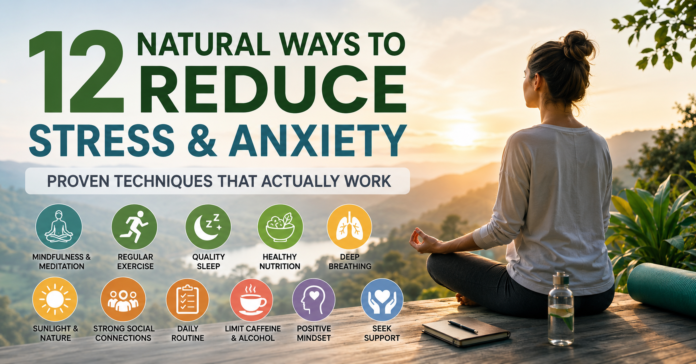
Stress and anxiety can affect your sleep, focus, mood, and overall health. Natural strategies such as exercise, mindfulness, quality sleep, proper nutrition, breathing exercises, and social connection can help regulate your nervous system, lower cortisol levels, and improve emotional resilience without relying solely on medication.
Key Takeaways
- Practice deep breathing for immediate stress relief.
- Prioritize 7–9 hours of quality sleep.
- Exercise regularly to reduce cortisol.
- Limit caffeine and excess alcohol.
- Eat nutrient-rich foods that support brain health.
- Spend time outdoors and in sunlight.
- Build strong social connections.
- Use mindfulness and meditation techniques.
- Create a structured daily routine.
- Seek professional help if symptoms persist.
Why Stress and Anxiety Are So Common Today
Stress is your body’s natural response to challenges or perceived threats. Anxiety becomes problematic when those feelings persist even when no immediate danger exists.
Common triggers include:
- Work pressure
- Financial concerns
- Relationship issues
- Health worries
- Social media overload
- Lack of sleep
When stress becomes chronic, your body releases higher levels of cortisol and adrenaline, which can impact physical and mental health.
Expert Insight: Many people try to eliminate stress completely. In practice, the goal is to improve your ability to recover from stress quickly.
1. Use Controlled Breathing to Calm Your Nervous System
Breathing techniques activate the parasympathetic nervous system, often called the “rest and digest” system.
Simple 4-4-6 Method
| Step | Action |
| 1 | Inhale for 4 seconds |
| 2 | Hold for 4 seconds |
| 3 | Exhale for 6 seconds |
| 4 | Repeat for 5 minutes |
Many people notice reduced tension within minutes.
Pro Tip: Use breathing exercises before meetings, presentations, or bedtime.
2. Exercise Consistently
Physical activity is one of the most effective natural anxiety management tools available.
Benefits include:
- Reduced cortisol
- Increased endorphins
- Better sleep
- Improved mood
- Enhanced focus
Best Exercises for Stress Relief
| Exercise | Benefit |
| Walking | Easy and accessible |
| Running | Strong endorphin boost |
| Yoga | Combines movement and mindfulness |
| Swimming | Full-body relaxation |
| Strength Training | Builds resilience and confidence |
Aim for at least 150 minutes of moderate exercise per week.
[Internal Link: Benefits of Daily Exercise]
3. Improve Sleep Quality
Poor sleep and anxiety often create a vicious cycle.
Better Sleep Checklist
- Maintain a consistent bedtime
- Avoid screens 60 minutes before bed
- Keep your room cool and dark
- Reduce caffeine after noon
- Establish a relaxing evening routine
Expert Insight: A common bottleneck is trying to fix anxiety while ignoring chronic sleep deprivation.
4. Eat Foods That Support Mental Wellness
Nutrition directly influences neurotransmitters such as serotonin and dopamine.
Focus on:
- Fatty fish
- Nuts and seeds
- Leafy greens
- Whole grains
- Fruits and vegetables
Limit:
- Excess sugar
- Processed foods
- Energy drinks
- Excess caffeine
Stress-Reducing Foods Comparison
| Food | Key Nutrient | Potential Benefit |
| Salmon | Omega-3 | Brain support |
| Spinach | Magnesium | Relaxation |
| Oats | Complex carbs | Stable energy |
| Walnuts | Healthy fats | Mood support |
| Yogurt | Probiotics | Gut-brain health |
[External Link: Highly Trusted Industry Source]
5. Spend More Time Outdoors
Nature exposure has been linked to lower stress levels and improved mental well-being.
Try:
- Walking in a park
- Gardening
- Hiking
- Sitting in natural sunlight
Even 20 minutes outdoors can help reset your mental state.
6. Practice Mindfulness Daily
Mindfulness trains your attention to focus on the present moment rather than future worries.
Begin with:
- Sit comfortably.
- Focus on your breathing.
- Notice thoughts without judgment.
- Return attention to the breath.
Just 10 minutes daily can make a noticeable difference over time.
Pro Tip: Consistency matters more than duration.
The RESET Framework for Daily Stress Management
A practical system for managing stress naturally:
R – Recognize
Identify stress triggers.
E – Evaluate
Determine what is within your control.
S – Simplify
Reduce unnecessary commitments.
E – Engage
Connect with supportive people.
T – Take Action
Focus on one small next step.
This framework helps prevent overwhelm and encourages consistent progress.
Common Mistakes People Make
- Waiting until burnout occurs
- Ignoring sleep quality
- Overusing caffeine
- Trying too many techniques at once
- Expecting immediate results
Sustainable habits create lasting improvements.
Frequently Asked Questions
What is the fastest natural way to reduce stress?
Deep breathing exercises, short walks, and mindfulness techniques often provide immediate relief.
Can diet affect anxiety levels?
Yes. Nutrition impacts brain function, energy levels, and neurotransmitter production.
Is exercise better than meditation?
Both are effective. Combining them often produces the best results.
How long does it take to see results?
Many people notice improvements within days, while long-term benefits develop over several weeks of consistent practice.
When should I seek professional help?
If anxiety significantly affects daily functioning, relationships, work, or sleep, consult a qualified healthcare professional.
Managing stress and anxiety naturally is less about finding one perfect solution and more about building a system of healthy habits. Focus on sleep, movement, nutrition, mindfulness, and social connection. Small actions repeated consistently often create the biggest improvements in mental well-being over time.

