Key Takeaways
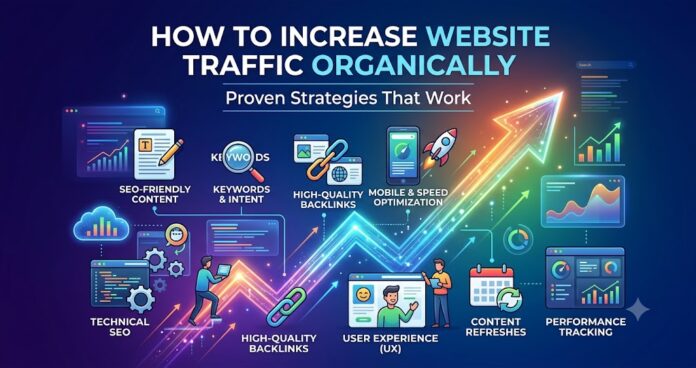
- Focus on SEO-friendly content creation.
- Target the right keywords with search intent.
- Improve on-page and technical SEO.
- Build high-quality backlinks.
- Optimize for mobile users and page speed.
- Use internal linking strategically.
- Monitor performance and continuously improve.
Why Organic Traffic Matters
Organic traffic refers to visitors who find your website through unpaid search engine results.
Unlike paid advertising, organic traffic continues generating leads and sales long after content is published.
Benefits include:
- Lower customer acquisition costs
- Higher trust and credibility
- Sustainable long-term growth
- Better conversion potential
- Increased brand authority
Expert Insight: Businesses that invest in organic traffic often build stronger online visibility than competitors relying solely on paid ads.
Start With Keyword Research
Before creating content, understand what your audience is searching for.
Keyword research helps identify:
- Customer questions
- Industry trends
- Purchase intent
- Ranking opportunities
Types of Keywords to Target
| Keyword Type | Example |
| Informational | How to increase website traffic organically |
| Commercial | Best SEO tools for websites |
| Transactional | Hire SEO consultant |
| Local | SEO agency near me |
Long-tail keywords are particularly valuable because they often have less competition and higher conversion rates.
Helpful Keyword Research Tools
- Google Keyword Planner
- Google Search Console
- Ahrefs
- SEMrush
- Ubersuggest
Pro Tip: A common bottleneck is targeting highly competitive keywords too early. Focus on low-competition opportunities first.
Create High-Quality Content Consistently
Content remains one of the strongest ranking factors.
Search engines prioritize content that helps users solve problems and answer questions.
Content Types That Drive Traffic
| Content Format | Traffic Potential |
| Blog Posts | High |
| Tutorials | High |
| Case Studies | Medium |
| Infographics | Medium |
| Videos | High |
| Ultimate Guides | Very High |
When creating content:
- Address user intent
- Use clear headings
- Add examples
- Include actionable advice
- Keep information updated
In practice, comprehensive content tends to rank better than thin articles.
Optimize Your On-Page SEO
On-page SEO helps search engines understand your content.
Key Elements to Optimize
Title Tags
Include your primary keyword naturally near the beginning.
Meta Descriptions
Write compelling descriptions that encourage users to click.
Headings
Use H1, H2, and H3 tags to structure content effectively.
Image Optimization
- Compress image sizes
- Use descriptive filenames
- Add keyword-relevant alt text
Internal Links
Connect related pages across your website.
Examples:
[Internal Link: Complete SEO Guide for Beginners]
[Internal Link: Keyword Research Strategies]
Expert Insight: Internal linking helps distribute authority throughout your website while improving user navigation.
Improve Technical SEO
Even great content can struggle if technical SEO issues exist.
Technical SEO Checklist
- Mobile-friendly design
- Fast loading pages
- Secure HTTPS connection
- XML sitemap
- Structured data markup
- Fix broken links
Core Web Vitals Matter
Google evaluates:
| Metric | Purpose |
| LCP | Loading performance |
| INP | User interaction speed |
| CLS | Visual stability |
Improving these metrics enhances both rankings and user experience.
Build High-Quality Backlinks
Backlinks remain one of Google’s strongest ranking signals.
A backlink occurs when another website links to your content.
Effective Link-Building Methods
- Guest posting
- Industry partnerships
- Digital PR campaigns
- Resource page outreach
- Original research reports
Focus on quality over quantity.
A few links from authoritative websites often outperform hundreds of low-quality links.
Pro Tip: Create unique content that naturally earns links, such as statistics, studies, and detailed guides.
Optimize for User Experience
Search engines increasingly prioritize user satisfaction.
Ways to Improve User Experience
- Simplify navigation
- Use responsive design
- Reduce page load times
- Improve readability
- Eliminate intrusive popups
When users stay longer and engage with your content, search engines receive positive signals about page quality.
Leverage Content Refreshes
Many website owners publish content once and never update it.
Refreshing old content can significantly increase traffic.
Update:
- Statistics
- Screenshots
- Examples
- Internal links
- Keywords
Regular updates help maintain relevance and improve rankings over time.
Track and Analyze Performance
You can’t improve what you don’t measure.
Monitor:
- Organic traffic
- Keyword rankings
- Click-through rates
- Bounce rates
- Conversion rates
Recommended tools include:
- Google Analytics
- Google Search Console
- Ahrefs
- SEMrush
Data-driven decisions consistently outperform guesswork.
[External Link: Google Search Central]
[External Link: Google Analytics Help Center]
Frequently Asked Questions
1. How long does it take to increase website traffic organically?
Most websites begin seeing meaningful improvements within 3–6 months, depending on competition and SEO efforts.
2. Is organic traffic better than paid traffic?
Organic traffic provides long-term sustainability, while paid traffic delivers immediate results. Both strategies can work together.
3. What type of content generates the most organic traffic?
Comprehensive guides, tutorials, case studies, and problem-solving articles often perform exceptionally well.
4. How important are backlinks for SEO?
Backlinks remain one of the most influential ranking factors because they signal trust and authority.
5. Can small websites compete with larger brands?
Yes. By targeting niche keywords, producing high-quality content, and optimizing user experience, smaller websites can rank successfully.
Start Growing Your Organic Traffic Today
Learning how to increase website traffic organically is not about finding shortcuts. It’s about creating valuable content, optimizing your website, earning trust, and consistently improving your online presence.
The earlier you start implementing these strategies, the sooner you’ll build sustainable traffic that continues generating leads, customers, and revenue long into the future.
Ready to increase your website traffic naturally? Start with keyword research, publish valuable content, and commit to a long-term SEO strategy today.

