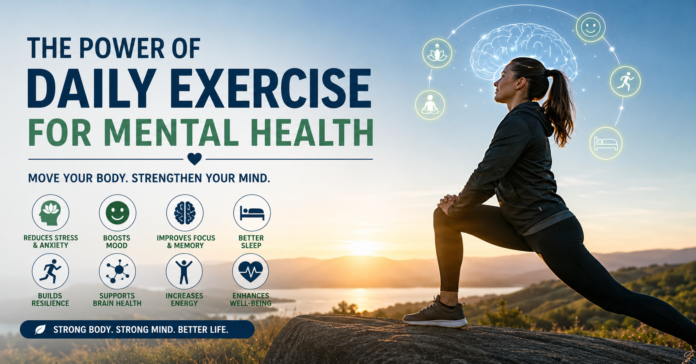
Daily exercise does more than improve physical fitness. It helps reduce stress, anxiety, and symptoms of depression while boosting mood, focus, sleep quality, and emotional resilience. Consistent movement supports brain health by regulating neurotransmitters, improving blood flow, and strengthening your ability to cope with life’s challenges.
Key Takeaways
- Daily exercise helps reduce anxiety and stress levels.
- Physical activity stimulates serotonin, dopamine, and endorphin production.
- Regular movement can improve symptoms of depression.
- Exercise enhances cognitive function, memory, and concentration.
- Better sleep quality often leads to improved mental wellness.
- Consistency matters more than workout intensity.
- Even 20–30 minutes of movement daily can produce meaningful benefits.
- Walking, strength training, yoga, cycling, and swimming all support mental health.
- Exercise can become a powerful long-term strategy for emotional resilience.
Why Exercise Has Such a Powerful Impact on Mental Health
Most people think exercise is primarily for weight management or physical fitness.
The reality is that your brain may benefit just as much as your muscles.
When you exercise, your body releases neurotransmitters and hormones that influence mood, energy levels, focus, and emotional regulation.
Important mental health-related entities include:
- Endorphins
- Dopamine
- Serotonin
- Cortisol
- Brain-Derived Neurotrophic Factor (BDNF)
- Neuroplasticity
- Circadian Rhythm
- Emotional Resilience
- Cognitive Function
These biological processes help explain why people often feel calmer, happier, and more mentally energized after physical activity.
Expert Insight: In practice, many people begin exercising to improve their appearance but continue because of the positive effects on mood and stress management.
How Daily Exercise Reduces Stress
Stress activates your body’s fight-or-flight response.
While this response is useful during genuine threats, chronic activation can contribute to burnout, fatigue, irritability, and anxiety.
Exercise acts as a natural stress-regulation system.
What Happens During Exercise?
| Stress Response | Exercise Response |
| Increased Cortisol | Better Cortisol Regulation |
| Muscle Tension | Physical Relaxation |
| Racing Thoughts | Improved Mental Clarity |
| Elevated Heart Rate | Improved Cardiovascular Efficiency |
| Mental Fatigue | Enhanced Energy Levels |
Regular physical activity helps your body become more resilient to future stressors.
Practical Example
Imagine finishing a demanding workday.
Instead of carrying that tension into the evening, a 30-minute walk or workout session helps your nervous system transition out of a heightened stress state.
Pro Tip: A common bottleneck is waiting until you feel motivated. Schedule exercise like an appointment instead.
Exercise and Anxiety: Why Movement Calms the Mind
Anxiety often creates a cycle of overthinking, physical tension, and hypervigilance.
Exercise interrupts this cycle.
Movement redirects mental attention, burns excess nervous energy, and improves autonomic nervous system regulation.
Best Types of Exercise for Anxiety Relief
| Activity | Mental Health Benefit |
| Walking | Reduces rumination |
| Yoga | Improves mindfulness |
| Swimming | Promotes relaxation |
| Cycling | Boosts mood |
| Strength Training | Builds confidence |
| Hiking | Combines exercise with nature exposure |
Research consistently shows that moderate-intensity exercise can significantly reduce symptoms of generalized anxiety.
[External Link: Highly Trusted Industry Source]
The Link Between Exercise and Depression
Depression affects millions of people worldwide.
While exercise is not a replacement for professional treatment when needed, it can serve as an effective complementary strategy.
Daily movement may help:
- Increase serotonin activity
- Improve self-esteem
- Create positive routines
- Encourage social interaction
- Reduce feelings of helplessness
Why Consistency Matters
One workout rarely transforms mental health.
The cumulative effect of daily movement creates the biggest change.
Think of exercise as a long-term investment in your brain rather than a quick fix.
Expert Insight: When deploying exercise for mental health improvement, frequency often matters more than intensity.
The Brain Benefits Most People Overlook
Many discussions focus only on mood improvement.
However, exercise also enhances cognitive performance.
Key Cognitive Benefits
- Better concentration
- Improved memory retention
- Faster information processing
- Increased creativity
- Stronger decision-making ability
This occurs partly because exercise increases blood flow and oxygen delivery to the brain.
Neuroplasticity and Brain Growth
Exercise supports neuroplasticity—the brain’s ability to adapt and form new neural connections.
One important contributor is Brain-Derived Neurotrophic Factor (BDNF), often called “fertilizer for the brain.”
Higher BDNF levels are associated with improved learning and cognitive function.
How Exercise Improves Sleep and Mental Wellness
Sleep and mental health are deeply connected.
Poor sleep increases the likelihood of:
- Anxiety
- Irritability
- Stress
- Emotional instability
Exercise helps regulate circadian rhythms and improve sleep quality.
Mental Health Impact of Better Sleep
| Better Sleep Outcome | Mental Health Benefit |
| Faster Sleep Onset | Reduced Stress |
| Deeper Sleep | Better Emotional Regulation |
| Fewer Night Awakenings | Improved Mood |
| Consistent Schedule | Lower Anxiety |
Many people experience improved mental health simply because regular exercise helps them sleep more effectively.
The MOVE Framework for Mental Health Success
To maximize mental health benefits, use the MOVE Framework.
M – Make It Daily
Consistency creates results.
O – Optimize Enjoyment
Choose activities you genuinely enjoy.
V – Vary Your Workouts
Mix walking, strength training, flexibility work, and cardio.
E – Evaluate Progress
Track mood, stress levels, sleep quality, and energy.
This framework makes exercise sustainable rather than temporary.
Pro Tip: The best workout for mental health is the one you can maintain for months and years.
Common Mistakes That Reduce Mental Health Benefits
Exercising Too Hard
Excessive training can increase fatigue and stress.
Ignoring Recovery
Rest days support both physical and mental recovery.
Focusing Only on Weight Loss
Mental health improvements often appear before visible physical changes.
Comparing Yourself to Others
Progress should be measured against your own starting point.
Building a Daily Exercise Routine That Lasts
Start small.
Many people fail because they attempt dramatic changes immediately.
A sustainable plan might look like:
Week 1
- 20-minute walk daily
Week 2
- Walk plus basic strength exercises
Week 3
- Add flexibility or yoga sessions
Week 4
- Establish a balanced routine
[Internal Link: Beginner Workout Plan for Busy Adults]
Small improvements repeated consistently produce long-term results.
Frequently Asked Questions
How much exercise is needed for mental health benefits?
Most health experts recommend at least 150 minutes of moderate physical activity weekly, though benefits can appear with much less.
Is walking enough to improve mental health?
Yes. Walking is one of the most accessible and effective forms of exercise for reducing stress and improving mood.
What is the best exercise for anxiety?
Walking, yoga, swimming, cycling, and strength training have all shown positive effects.
How quickly can exercise improve mood?
Many people notice short-term mood improvements immediately after a workout, while long-term benefits develop over several weeks.
Can exercise replace therapy or medication?
Exercise can be a valuable tool but should not replace professional treatment when recommended by a healthcare provider.
Final Thoughts
Mental health is shaped by countless factors, but daily exercise remains one of the most powerful habits you can control. Whether you choose walking, strength training, yoga, cycling, or swimming, consistent movement helps regulate stress, improve mood, enhance cognitive function, and build emotional resilience.
You do not need perfect workouts.
You need regular movement.
Over time, those small daily actions can create meaningful improvements in how you think, feel, and respond to life’s challenges.

